Using Data, Automation & AI to Bring an World Cup Sweepstake to Life
Challenge
Making Complex Data Easier to Track and Manage
STM’s 2026 World Cup sweepstake started as a simple internal competition, with 48 entrants, assigned teams, a £240 prize pot and a mix of prizes covering the tournament winner, losing finalist, third-place play-off, worst group-stage teams, goals and bookings.
But with an expanded tournament format, multiple prize categories and daily results to track, the admin could quickly become time-consuming and difficult to manage manually.
The challenge was to create something that made the sweepstake easier to manage, more engaging for the team, and more useful than a static spreadsheet. It needed to bring the data together in one place, apply the agreed prize logic clearly, and give people a reason to keep coming back throughout the tournament.
Approach
Turning Spreadsheet Data into a Live Digital Hub
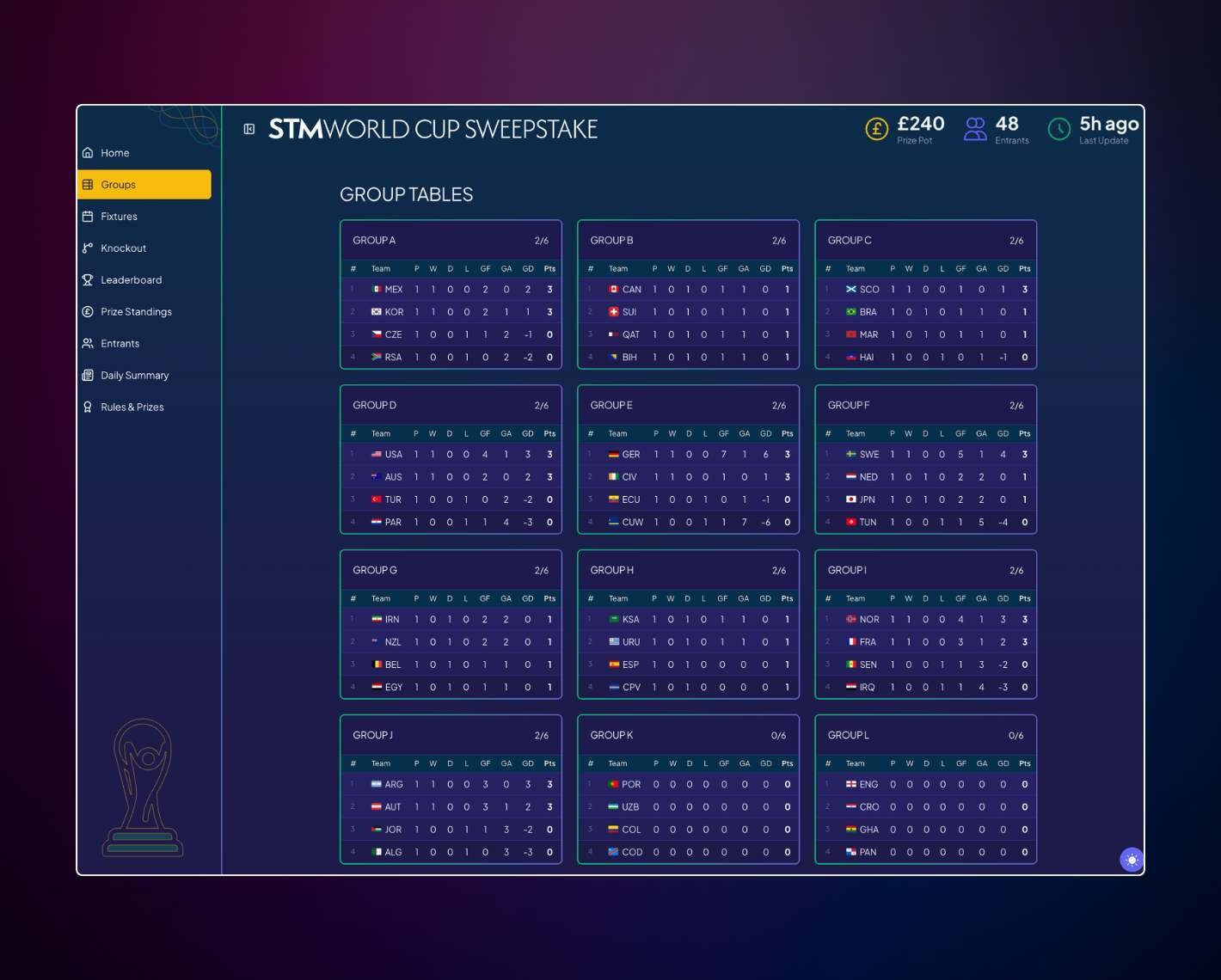
STM CODE developed an interactive internal dashboard that turned the sweepstake into a live digital hub for the whole STM team.
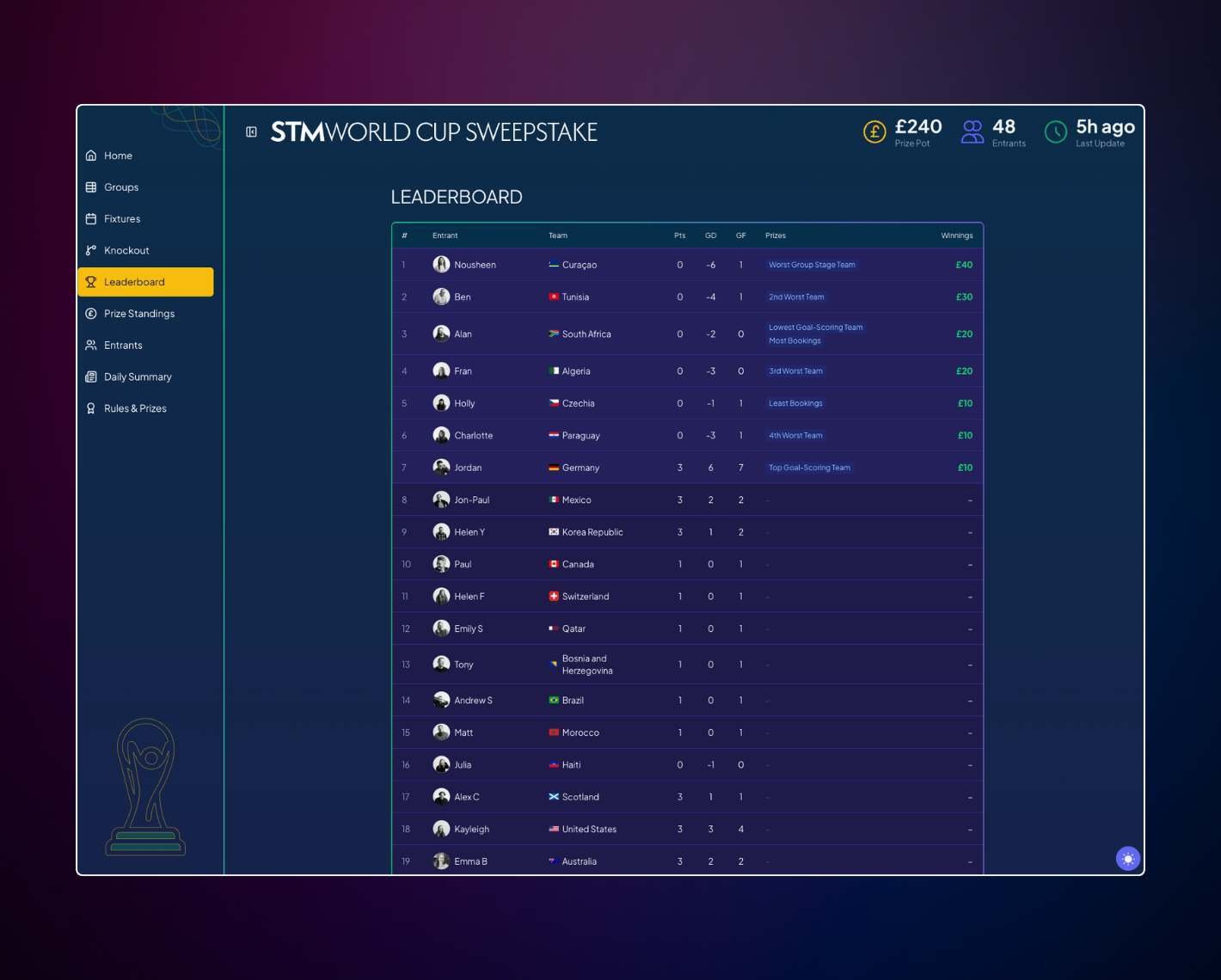
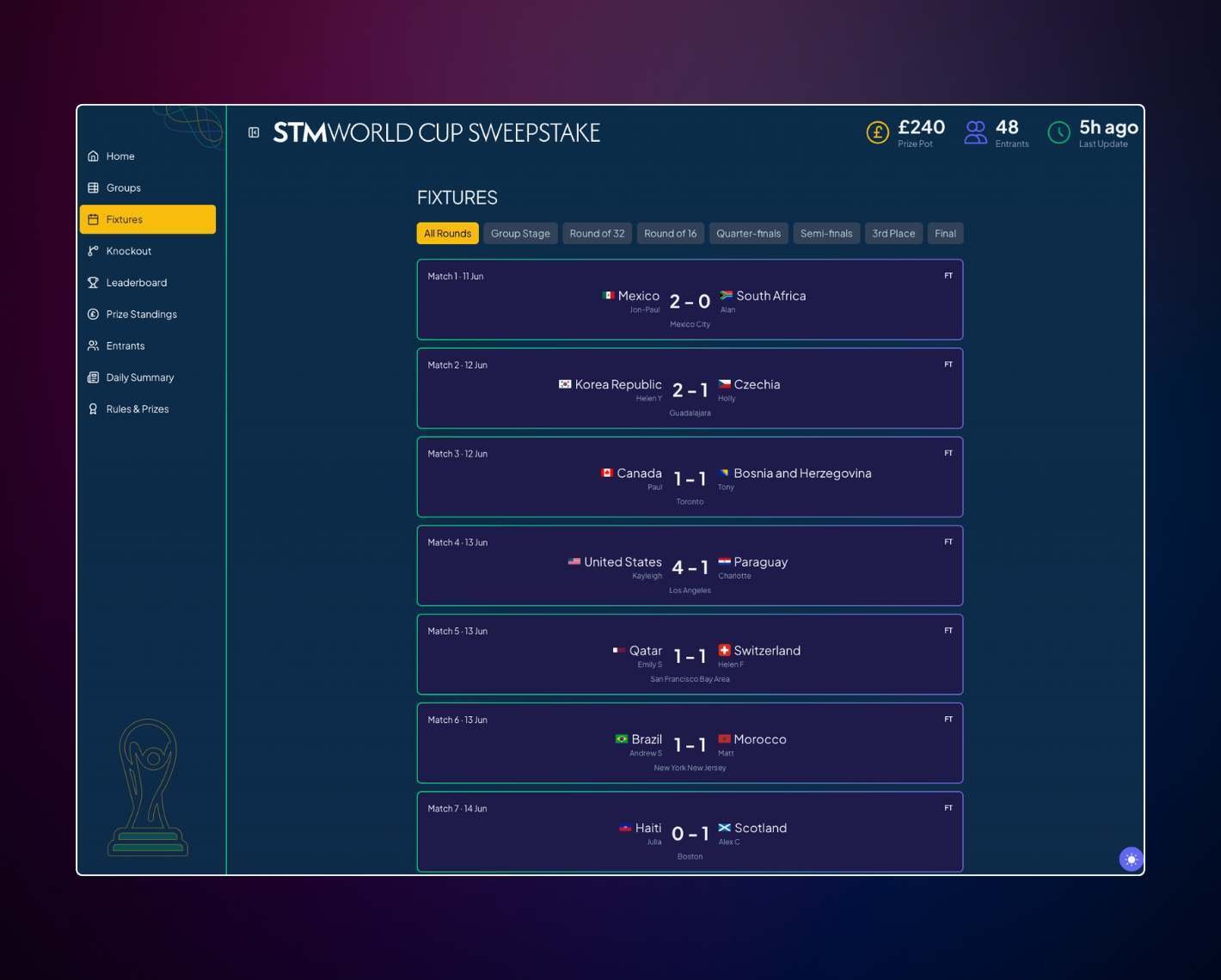
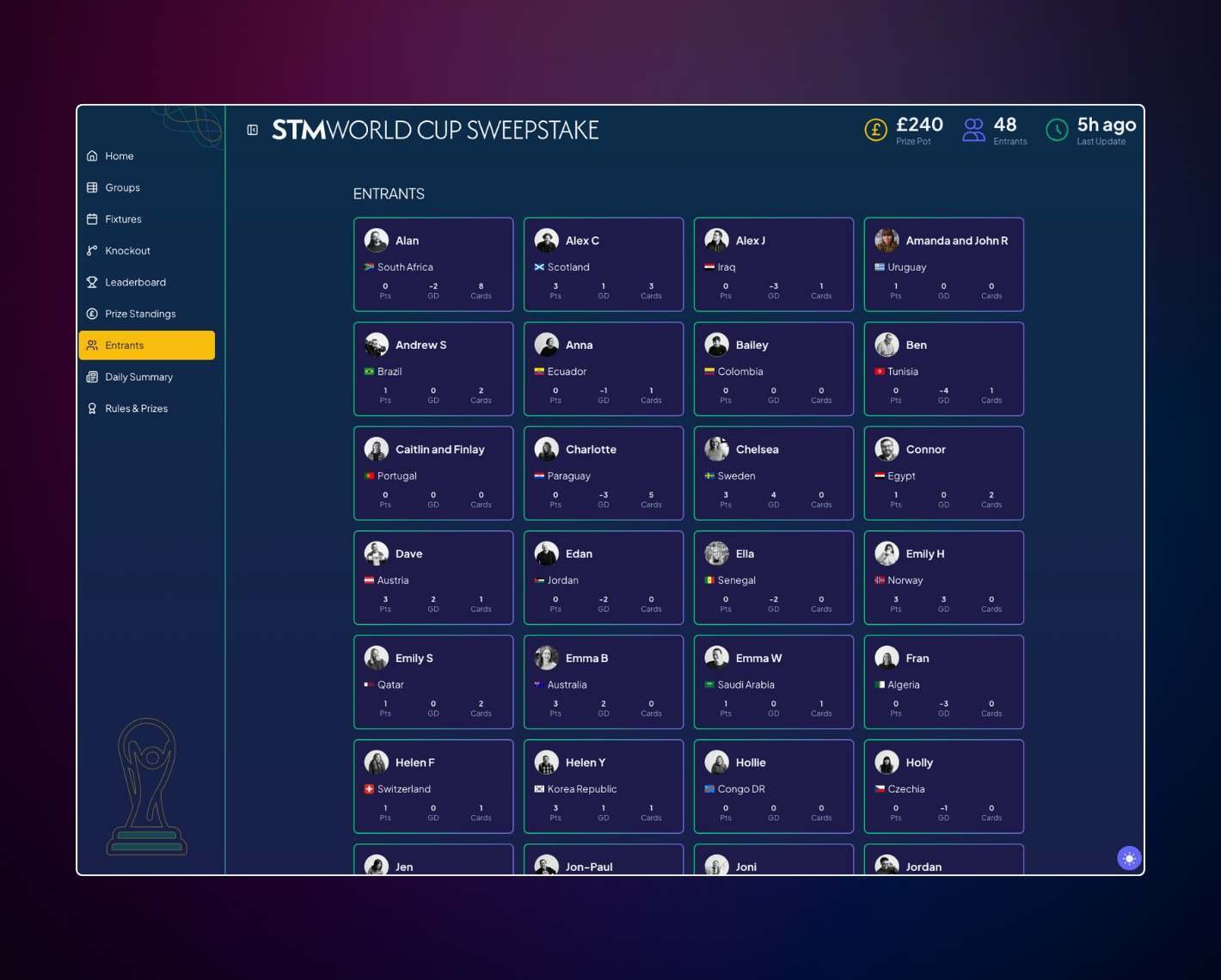
The dashboard brings together entrant data, team assignments, fixtures, match results, prize logic, group-stage rankings, goal totals, booking points and daily updates. Instead of relying on a spreadsheet to manually track every outcome, the tool uses structured data and clear logic to calculate the current sweepstake positions as the tournament progresses.
To keep the dashboard accurate and up to date, CODE integrated an API connector that pulls live World Cup match data into the system, including fixtures, results, scores and key match information. This removes the need for manual daily updates and gives the dashboard a reliable data feed to work from throughout the tournament. The match data is then matched against STM’s sweepstake database, allowing the tool to automatically calculate prize positions, group standings, goals, bookings and team progression.
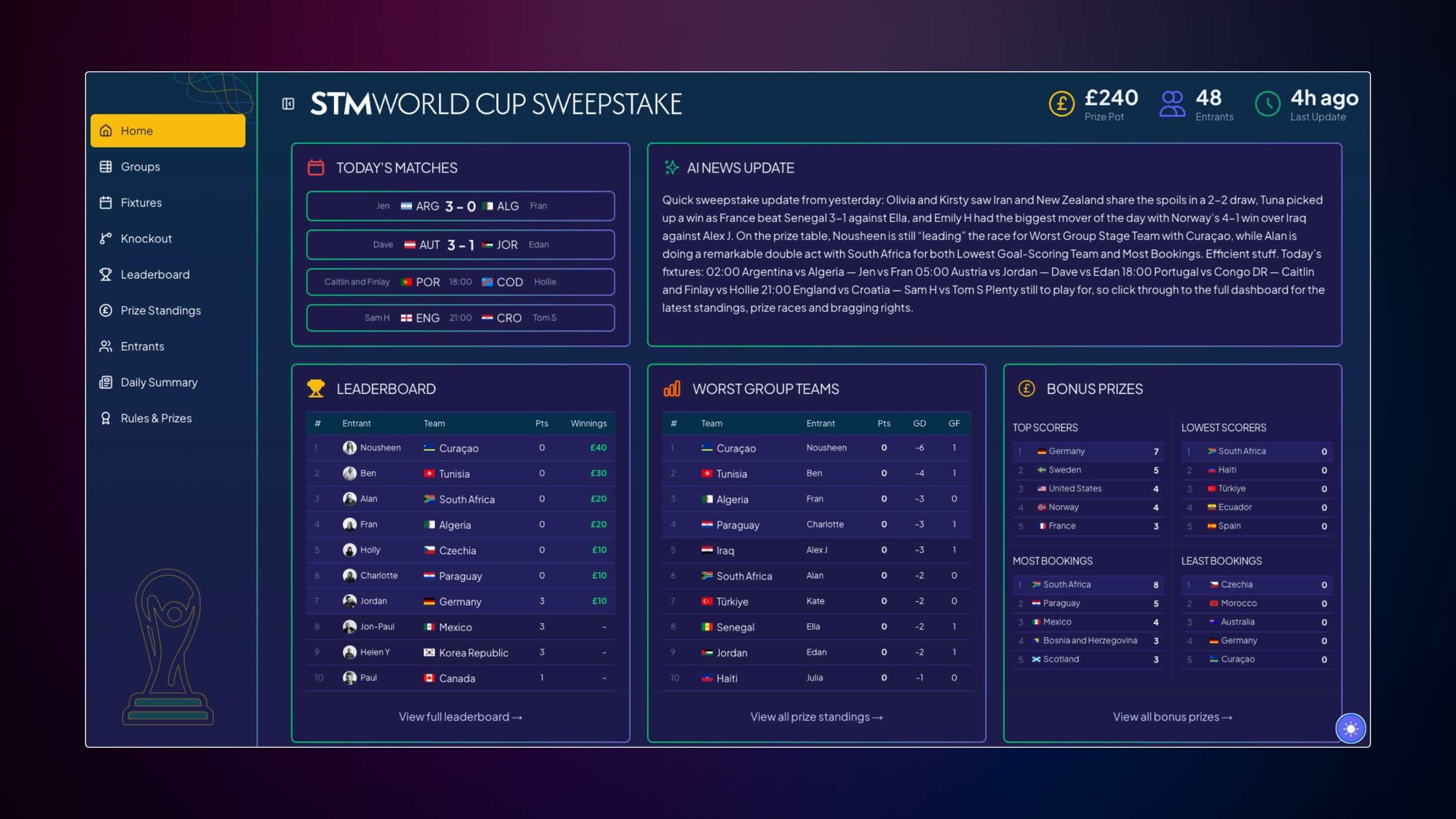
The experience was designed to feel more like an engaging internal product than a traditional analytics dashboard. Key sections include a Prize Tracker, Group Standings, Today’s Matches, Top and Lowest Goal Scoring Teams, Most and Least Bookings, and the all-important Race to the Bottom, which tracks the teams currently in line for the worst group-stage prizes.
To make the sweepstake easier and more enjoyable to follow, the dashboard also features an AI-generated daily update. This appears directly in the dashboard and is posted into a dedicated Teams channel, giving people a quick, light-hearted summary of what has changed and helping the team keep up with the action.
Behind the scenes, the project combined data structure, automation, dashboard logic and user experience design. CODE took what could have remained as a manual spreadsheet and transformed it into a live, accessible tool that makes the sweepstake easier to manage, easier to understand and more enjoyable to use.

Outcome
Reducing Admin and Increasing Engagement Through a Live Data
The World Cup Sweepstake dashboard turned a simple internal spreadsheet into a live, interactive tool that is easier to manage, easier to understand and more enjoyable for the team to use.
For STM, it reduced the manual admin involved in tracking fixtures, results, prize positions, goals, bookings and group-stage performance. Instead of relying on one person to keep multiple moving parts updated, the dashboard brings everything together in one place, with automated data feeds, clear prize logic and daily updates that help people follow the action throughout the tournament.
It also created a stronger internal engagement moment. The sweepstake became more than a list of names and teams; it became a shared digital experience that people can check each morning, talk about in Teams and use to follow their team’s progress, prize chances and position in the all-important Race to the Bottom.
While the project was built for an internal sweepstake, it demonstrates how structured data, automation, dashboard logic and user-focused design can turn manual processes into practical digital products. The same approach could support client needs such as campaign reporting hubs, sales dashboards, event reporting tools, product data dashboards, customer service trackers, internal portals, automated leadership reporting or live operational command centres.
The result is a fun internal tool with a clear commercial story: when data is structured properly and designed around the user, even a basic spreadsheet can become a digital experience people actually want to use.