
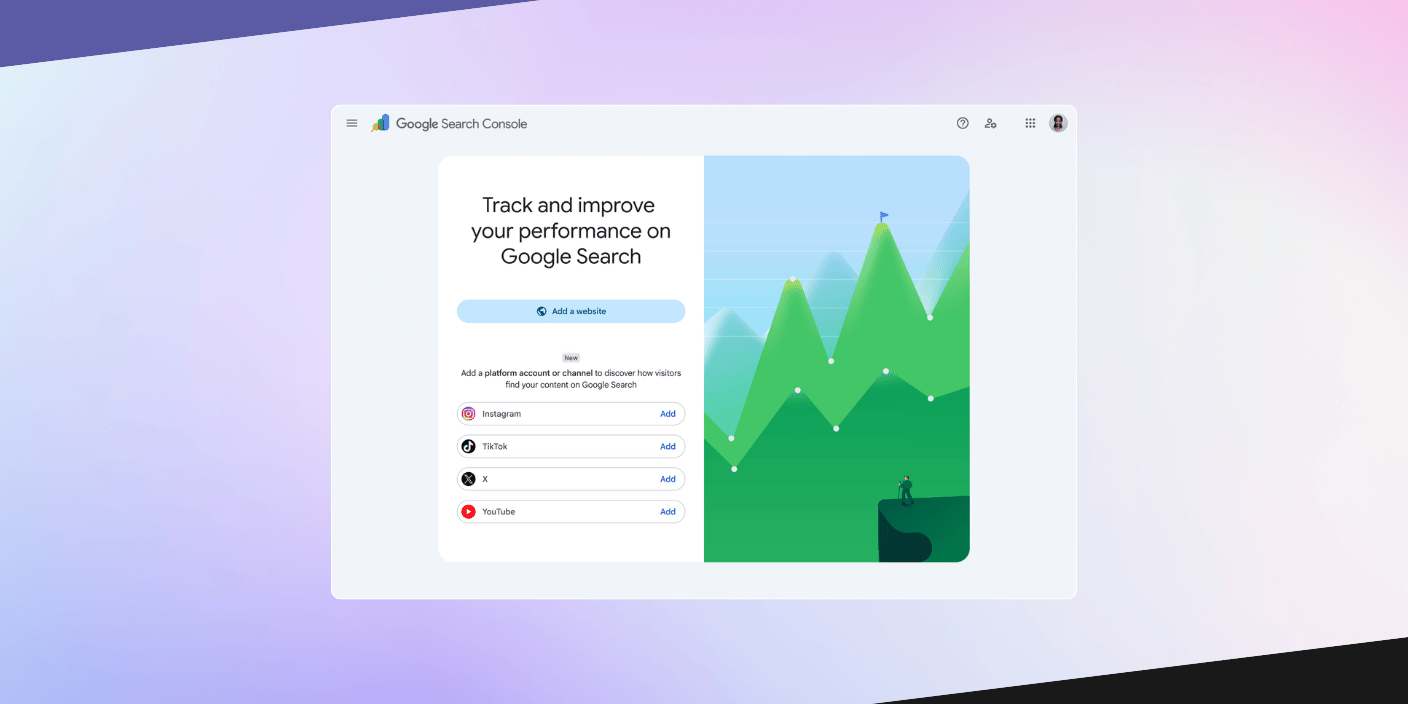
Google has launched platform properties in Search Console, a new reporting feature that lets brands and creators see how their Instagram, TikTok, X and YouTube content performs in Google Search and Discover.
In simple terms, it means your social and video content can now be tracked beyond the platform it was posted on. You can see which search terms are leading people to your posts, how often that content is appearing in Google and how audiences are interacting with it.
For brands, this is a crucial step forward. Because people are not only discovering businesses through websites anymore. They’re finding answers, ideas and recommendations across social, video, search and everything in between.
.png?width=550&height=564&name=search-console-social-video-platforms%20(1).png)
What has Google announced?
Google has introduced a new Search Console property type called a platform property.
Until now, Search Console has mainly helped brands understand how their website content appears in Google Search. With platform properties, that visibility can now extend to selected social and video accounts too.
The initial rollout supports Instagram, TikTok, X and YouTube, giving brands a clearer view of how content on those platforms is being discovered through Google.
Once connected and verified, marketers can start to see which posts are appearing in Search and Discover, which search terms are driving people to them, and how that content is performing beyond the platform it was originally published on.
The feature is being rolled out gradually, so not every account will see it straight away. But for brands already investing in social, video, creator content or organic visibility, it is one to get set up early.
What can brands see in the new reports?
Each connected platform property includes three main areas of reporting.
Performance reporting
The Performance report shows metrics including impressions and total clicks from Google. Brands can filter the information by individual post and search query, helping them understand:
- Which social posts are appearing most frequently in Google
- Which posts are attracting clicks
- What people are searching for when they find the content
- Which topics or formats are gaining visibility over time
The data can also be exported for use in wider reporting tools and dashboards. This is perhaps the most useful part of the update.
Previously, a social team might know that a video performed well on TikTok, while an SEO team could see growing interest in a related topic.
Connecting those two signals often involved third-party platforms, manual analysis or a certain amount of educated guesswork. Google is now providing a more direct view of that relationship.
Insights reporting
The Insights report offers a simpler overview of recent traffic trends, top-performing posts and the ways people are finding the account through Google. This should make the information accessible to a wider group of people, rather than limiting it to teams that spend their lives digging through detailed analytics reports.
Achievements
Search Console will also highlight milestones, such as reaching a new level of clicks from Google Search within a 28-day period. This is less strategically important than the query and post-level data, but it can still help teams monitor growth and communicate progress internally.
Why is this update important?
A search journey no longer begins and ends on a traditional search results page.
Someone might discover a brand through an Instagram post, research the topic on Google, watch a YouTube review, return to TikTok for a demonstration and finally visit the company’s website.
Search, social and video increasingly overlap. Google’s new reporting gives brands a clearer view of one part of that journey: how content published away from their website earns visibility within Google’s own search and discovery experiences.
Social performance can now be measured beyond the platform
Social reporting has traditionally focused on metrics generated inside each platform. Those metrics remain valuable. Views, watch time, shares, saves, comments and engagement can all tell you whether content is connecting with its intended audience. But they do not provide the full picture.
A post might receive modest engagement immediately after publication but continue appearing in Google searches for months. Another might generate huge reach within a social app but attract very little visibility outside it.
Those are two very different types of performance. The new Search Console reports give marketers an additional way to assess the value and lifespan of social content.
Instead of asking only, “How did this post perform on Instagram?”, teams can also ask, “Is this post helping people find us through Google?”
Content planning can become more evidence-led
Most content strategies contain an element of experimentation. Not every topic, hook or format can be predicted in advance. This update will not remove that creative process, nor should it. What it can do is provide another layer of evidence.
For example, a retailer may discover that its short videos answering practical product questions are generating more Google impressions than highly polished campaign content.
A travel brand might find that destination guides continue appearing in Search long after their initial social engagement has slowed.
A B2B company could identify that simple explainer videos are being discovered for niche, high-intent questions.
These insights can then influence future content planning. Rather than simply repeating the posts that received the most likes, brands can invest in content that is proving useful across a wider range of discovery channels.
Creator partnerships may gain another measurement layer
The update could also become useful when assessing creator and influencer partnerships. Creators can verify their own supported social accounts, including those who do not operate a separate website.
This creates the potential to evaluate whether creator content is earning visibility through Google as well as performing within the original platform.
For brands, that introduces new questions when reviewing a partnership:
- Did the content appear for relevant searches?
- Did it continue attracting visibility after the campaign ended?
- Which creator posts performed best in Google?
- Did the partnership help the brand become more visible around an important topic?
Access and data-sharing arrangements would still need to be agreed with the creator, and search performance should not replace existing campaign measures.
However, it could provide a valuable additional perspective, particularly for evergreen product reviews, demonstrations, tutorials and educational content.
Does this measure AI search visibility too?
Not directly. It is important not to overstate what this update currently provides.
Google’s announcement specifically refers to performance across Google Search and Discover. It does not say that platform properties report whether a social post has appeared in an AI Overview or has been used to generate an AI response.
However, the update does reinforce a broader principle that matters for AI-led discovery: a brand’s searchable presence extends far beyond its website.
Useful videos, expert commentary, creator content and social posts all contribute to the wider information available about a brand and its subject matter.
Brands should therefore think less about optimising one isolated channel and more about building a consistent, credible and useful presence across the places their audiences search.
What should brands do now?
There is no need to completely rewrite your social strategy overnight. The feature is still being rolled out and brands will need time to gather enough data to identify meaningful patterns.
There are, however, a few sensible steps to take now.
Connect your accounts when the feature becomes available
In Search Console, open the property selector and choose Add property. You should then be able to select Instagram, TikTok, X or YouTube and follow the relevant authorisation process.
Google says the connection is completed through its onscreen verification steps.
Establish an early benchmark
Once data begins appearing, record your starting position. Look at overall clicks and impressions, the posts already earning visibility and the search queries associated with them. This gives you a benchmark against which future content activity can be measured.
Avoid judging the data too quickly
A few days of data will not be enough to reshape your entire content plan.
Allow time for patterns to form, particularly if your account publishes infrequently or focuses on seasonal topics. Longer reporting periods will help distinguish a genuine content opportunity from a temporary spike.
Bring your teams and reporting together
Search, social, content and analytics teams should review the information collectively. A query that looks unimportant in an SEO report might inspire an excellent social video. A social post gaining search visibility might reveal a topic that deserves a dedicated website guide or landing page. Shared data is most useful when it leads to shared decisions.
Look beyond headline metrics
The post with the highest number of impressions may not always be the most commercially valuable. Consider the relevance and intent behind the searches, the quality of traffic being generated and how the content supports the wider customer journey. Visibility is useful. Relevant visibility is better.
A wider view of search visibility
This update is another reminder that brand visibility is no longer confined to your website. Search Console has traditionally helped brands understand how their own web pages perform in Google. Now, that picture is starting to widen, giving marketers more visibility over how social and video content contributes to discovery too.
That matters because people do not always take a neat, direct route to a website. They might find a brand through a TikTok, revisit it through a Google search, watch a YouTube review, or engage with an Instagram post before ever clicking through to the site.
For marketers, that means search visibility should no longer be treated as the responsibility of the SEO team alone. It is shaped by every useful piece of content a brand publishes, wherever that content happens to live.
The brands that gain the most value from Google’s new reporting will be the ones using data to connect their teams, understand how audiences really discover them and make smarter decisions about the content they create next.
At STM AGENCY, we help brands bring search, content, paid media and analytics together, turning fragmented channel data into a clearer view of what is driving visibility and performance.
Need help understanding how your brand is being discovered across search, social and emerging AI-led platforms? Speak to our team about your brand visibility and measurement strategy.
Share Article